 Skip to content
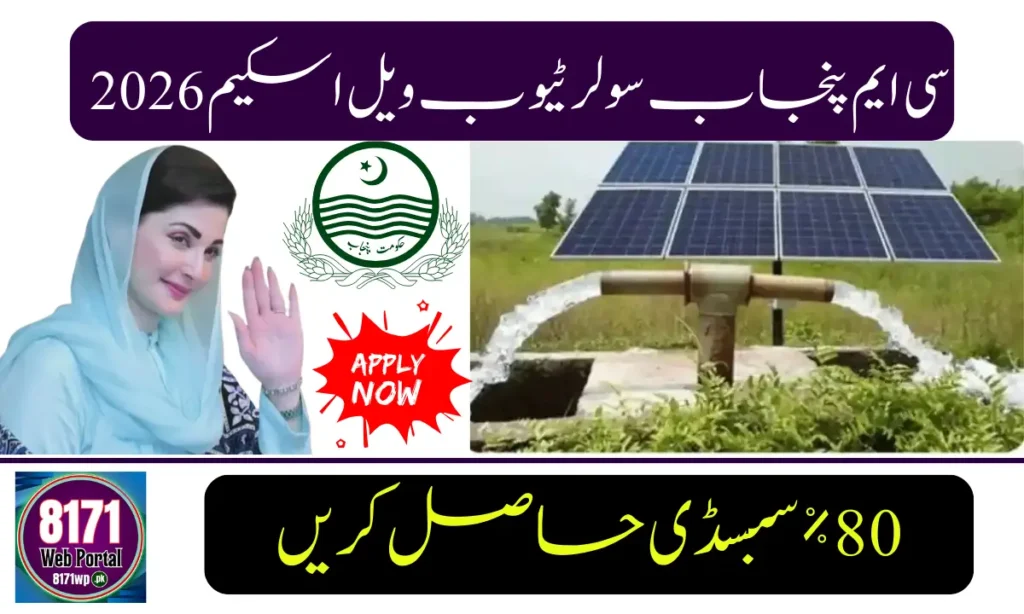
The Punjab Solar Tubewell Project 2026 is one of the most important initiatives launched by the Government of Punjab to support farmers and reduce the burden of expensive electricity and diesel used for irrigation.
Under this project, traditional tubewells will be converted into solar-powered irrigation systems, allowing farmers to run their water pumps using renewable energy.
The program is designed to increase agricultural productivity while lowering energy costs for farmers across the province.
What is the Punjab Solar Tubewell Project 2026?
The Punjab Solar Tubewell Project 2026 is a government program aimed at converting thousands of electric and diesel tubewells into solar energy–based systems.
The initiative is being implemented under the supervision of the Punjab Agriculture Department to promote sustainable agriculture and reduce dependence on conventional energy sources.
With rising electricity tariffs and fuel prices, many farmers struggle to afford irrigation. Solar-powered tubewells provide a long-term solution by offering clean and cost-effective energy.
Key Objectives of the Project
The main goals of the Punjab Solar Tubewell Project 2026 include:
- Reduce electricity and diesel costs for farmers
- Promote renewable energy in agriculture
- Increase crop productivity through reliable irrigation
- Support small and medium farmers
- Reduce environmental pollution
The project will also help improve water management systems across agricultural areas.
Key Features of Punjab Solar Tubewell Project 2026
| Feature | Details |
|---|---|
| Project Name | Punjab Solar Tubewell Project 2026 |
| Implementing Authority | Punjab Agriculture Department |
| Target Beneficiaries | Farmers in Punjab |
| Energy Source | Solar Power |
| Main Benefit | Reduced electricity and diesel costs |
The project is expected to benefit thousands of farmers across Punjab in its first phase.
Benefits for Farmers
The Punjab Solar Tubewell Project 2026 offers several advantages to farmers.
Lower Irrigation Costs
Solar energy eliminates expensive electricity bills and diesel fuel expenses.
Continuous Power Supply
Farmers can irrigate their fields without worrying about power outages.
Environment Friendly
Solar energy reduces carbon emissions and promotes green agriculture.
Increased Agricultural Production
Reliable irrigation helps farmers grow more crops throughout the year.
These benefits make solar-powered tubewells an important step toward sustainable farming.
Who Can Apply?
Farmers who meet certain conditions can apply for the Punjab Solar Tubewell Project 2026.
Basic Eligibility Criteria
- Must be a resident of Punjab
- Must own agricultural land
- Must have an existing tubewell or irrigation system
- Must provide identification documents
Farmers may also need verification through the Punjab Land Record Authority.
How to Apply for the Punjab Solar Tubewell Project 2026
The government plans to launch an easy application process for farmers.
Application Steps
- Visit the official agriculture department website
- Fill out the Punjab Solar Tubewell Project 2026 application form
- Upload required documents
- Submit the form online or through local agriculture offices
- Wait for verification and approval
After approval, the installation of the solar system will begin according to the project schedule.
Expected Impact on Agriculture
Experts believe the Punjab Solar Tubewell Project 2026 will significantly transform farming in the province.
Major Expected Outcomes
- Lower production costs for farmers
- Improved crop yields
- Reduced dependency on fossil fuels
- Promotion of renewable energy in rural areas
The initiative also aligns with Pakistan’s broader renewable energy goals promoted by the Alternative Energy Development Board.
Final Thoughts
The Punjab Solar Tubewell Project 2026 is a major step toward modernizing agriculture in Punjab. By shifting irrigation systems to solar energy, the government aims to provide financial relief to farmers while encouraging environmentally friendly farming practices.
If implemented successfully, the project could become a model for other provinces in Pakistan, helping the country move toward sustainable and energy-efficient agriculture.