 Skip to content
The Government of Pakistan has introduced fresh improvements in the Ehsaas 8171 Program to ensure that deserving families can easily become part of the national social protection system.
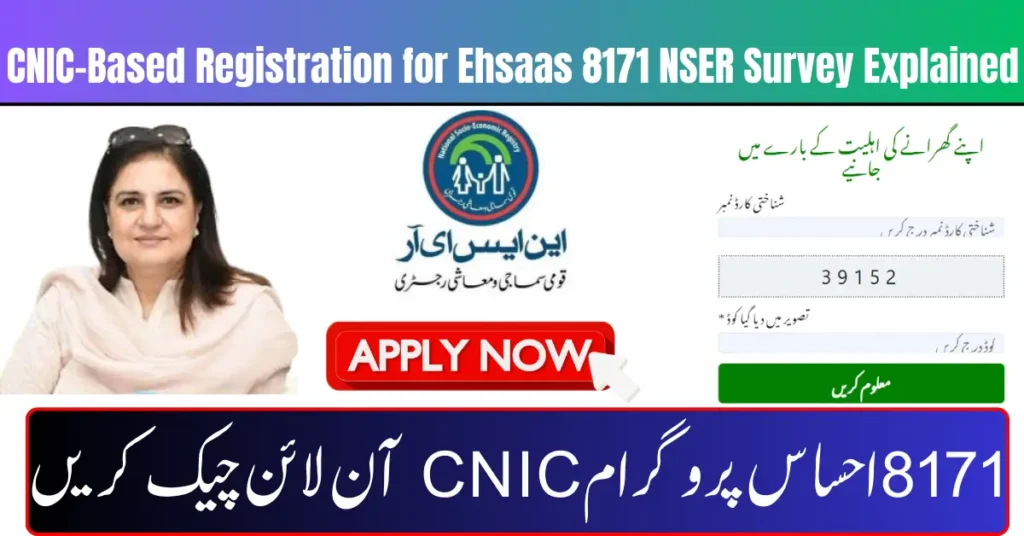
In 2026, the latest-cnic-based-registration-for-ehsaas-8171-nser-survey-explained/ process has been updated to make registration faster, transparent, and more accessible for low-income households.
This guide explains everything in simple words, including eligibility, registration steps, CNIC verification, and how the NSER survey connects with Ehsaas and BISP payments.
What Is the Ehsaas 8171 Program?
Ehsaas 8171 is Pakistan’s flagship poverty alleviation initiative under the Benazir Income Support Programme (BISP).
Its main goal is to provide:
- Cash assistance to poor families
- Financial support to women
- Emergency relief during crises
- Long-term poverty reduction
The program uses CNIC-based verification and the National Socio-Economic Registry (NSER) to identify deserving citizens.
Understanding the NSER Survey
The NSER survey is a nationwide data collection system that records:
- Household income
- Family size
- Education level
- Employment status
- Living conditions
This database decides who qualifies for Ehsaas and BISP assistance.
Why NSER Matters in 2026
- Updated household data improves fairness
- New families can enter the system
- Previously ineligible households may now qualify
- Fake or duplicate records are removed
What Is CNIC-Based Registration?
CNIC-based registration means your Computerized National Identity Card number is used as your unique identity to apply and verify eligibility.
This system ensures:
- One person, one record
- Faster verification
- Reduced fraud
- Direct linkage with NADRA
Who Can Apply 2026?
You may apply if you:
- Are you a Pakistani citizen
- Belong to a low-income household
- Have a valid CNIC
- Are not a government employee
- Do not own a large property or business
Priority Groups
- Widows
- Orphans
- Persons with disabilities
- Elderly citizens
- Female-headed households
Latest CNIC-Based Registration for Ehsaas 8171 NSER Survey Explained
The government has simplified the process into multiple channels so everyone can apply easily.
1. Registration Through BISP Tehsil Office
Visit your nearest BISP or Ehsaas center with:
- Original CNIC
- Children’s B-Form (if any)
- Utility bill (optional)
Steps:
- Get a token
- Provide household information
- Biometric verification
- Receive confirmation slip
2. Online CNIC Check via 8171 Portal
After registration, you can check your status:
- Enter CNIC number
- Complete captcha
- View eligibility result
This method helps applicants track progress without visiting offices
3. SMS Verification Method
Send your CNIC number to 8171.
You will receive a reply confirming:
- Eligible
- Under verification
- Not eligible
What Happens After Registration?
Once your data enters NSER:
- Your poverty score is calculated
- Cross-check with NADRA, utility records, and bank data
- Eligible families are added to the Ehsaas 8171 beneficiary list
If approved, you will start receiving cash assistance in the upcoming payment cycles.
Cash Assistance Amounts in 2026
Although amounts may vary by program category, typical support includes:
- Rs. 13,500 quarterly stipend (BISP Kafalat)
- Education stipends for children
- Health and nutrition support
These payments are disbursed through:
- Campsites
- Partner banks
- ATMs
- Mobile wallets
Common Reasons for Rejection
- Incorrect CNIC information
- Incomplete household data
- High poverty score
- Government employment record
- Duplicate registration
If rejected, you can request data correction at your nearest BISP office.
Final Thoughts
If you or someone in your family is struggling financially, registering through the Ehsaas 8171 CNIC-based NSER survey can open the door to vital government support.
Stay informed, follow official channels, and make sure your household data is accurate. This small step can lead to long-term financial relief and stability.