 Skip to content
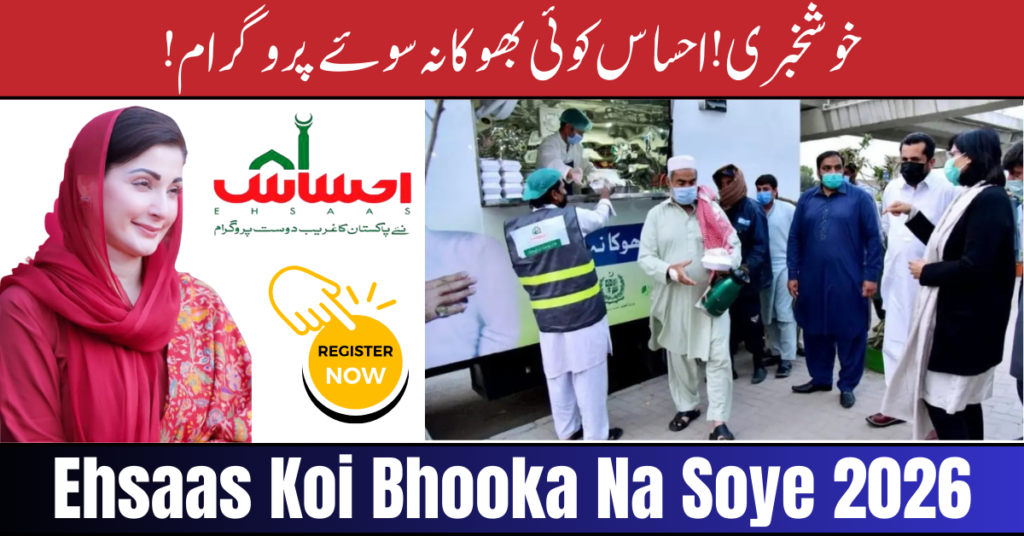
The Government of Pakistan has continued its relief mission under Ehsaas Koi Bhooka Na Soye 2026, aiming to ensure that no citizen sleeps hungry.
In 2026, the program has been strengthened with better monitoring, expanded food distribution points, and improved coordination with provincial authorities.
This initiative operates under the umbrella of the Ehsaas Program and works alongside the Benazir Income Support Programme to support vulnerable families across the country.
What is Ehsaas Koi Bhooka Na Soye 2026?
Ehsaas Koi Bhooka Na Soye 2026 is a national food assistance initiative designed to provide:
- Free cooked meals
- Food ration support
- Emergency hunger relief
- Mobile food distribution services
The goal is simple: zero hunger in Pakistan.
The program mainly targets:
- Daily wage laborers
- Homeless individuals
- Low-income families
- Disaster-affected communities
Key Features in 2026
In 2026, the program introduced several improvements:
1. Mobile Food Trucks
Food trucks distribute fresh meals in urban and semi-urban areas, especially in:
- Bus terminals
- Railway stations
- Slum areas
- Industrial zones
2. Expanded Coverage
Operations have expanded in major cities, including:
- Lahore
- Karachi
- Islamabad
- Peshawar
- Quetta
Rural districts are also being added in phases.
3. Digital Monitoring System
Authorities now use a centralized database linked with the National Database and Registration Authority to verify beneficiaries and prevent duplication.
Who is Eligible?
Eligibility criteria for Ehsaas Koi Bhooka Na Soye 2026 include:
- Pakistani citizen with a valid CNIC
- Monthly income below the poverty threshold
- Registered in the National Socio-Economic Registry (NSER)
- Not receiving a high-level government salary or pension
Preference is given to families already registered under:
- Benazir Kafalat Program
- Ehsaas Emergency Cash Program
How to Register for Ehsaas Koi Bhooka Na Soye 2026?
The registration process in 2026 is simple and transparent.
Step-by-Step Guide
- Visit the nearest Ehsaas registration center.
- Provide your original CNIC.
- Complete NSER verification survey.
- Wait for the confirmation SMS.
For updates, applicants can check through the official portals of:
- Poverty Alleviation and Social Safety Division
How Meals Are Distributed
The distribution process follows strict guidelines:
- Biometric verification (where applicable)
- On-site meal distribution
- No cash exchange
- Hygiene and food quality monitoring
Meals typically include:
- Roti
- Rice
- Daal
- Vegetable curry
- Drinking water
Special Ramadan and winter packages are also provided.
Budget Allocation 2026
For the fiscal year 2026, the federal government has increased funding for hunger relief programs.
Key highlights:
- Increased budget allocation
- Public-private partnerships
- NGO collaboration
- Transparent auditing system
The support aligns with Pakistan’s commitment to the United Nations Sustainable Development Goals (SDGs), particularly Zero Hunger.
Impact of Ehsaas Koi Bhooka Na Soye 2026
The program has created a measurable impact:
- Millions of meals are distributed annually
- Reduction in urban hunger levels
- Support during the inflation crisis
- Relief during natural disasters
It also complements other welfare initiatives such as:
- Punjab Social Protection Authority
- Bait-ul-Mal
Common Questions
Is there any online registration?
Currently, physical verification is required for new applicants. However, existing beneficiaries can check eligibility status online.
Is the program available nationwide?
Yes, but expansion happens in phases depending on district-level data.
Is there any fee?
No. Registration and meal distribution are completely free.
Final Words
Ehsaas Koi Bhooka Na Soye 2026 continues to play a vital role in Pakistan’s social protection landscape.
With expanded coverage, improved transparency, and increased funding, the government aims to ensure that no deserving citizen suffers from hunger.
Families facing food insecurity should immediately visit their nearest registration center and complete verification.
This initiative reflects a broader national effort to build a welfare-oriented Pakistan where basic needs are protected for all.